The adventure pulps get a shelf of their own, and at its head stand the Big Four: All-Story, Argosy, Blue Book and Adventure — the four titles that anchor the category, each shown below with a sample cover of its own. Filed beside them are the other two general-fiction giants, The Popular Magazine and Short Stories, since adventure was their stock in trade too. These were the magazines that invented the pulp form: lost worlds, jungle kings, sea stories and the whole map of imaginary geography, sold at ten cents.
The Big Four
All-Story, Argosy, Blue Book and Adventure — a sample cover for each of the Big Four:
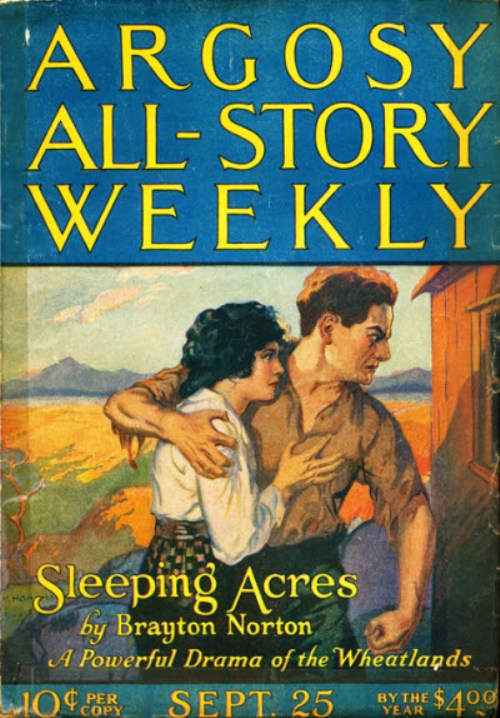
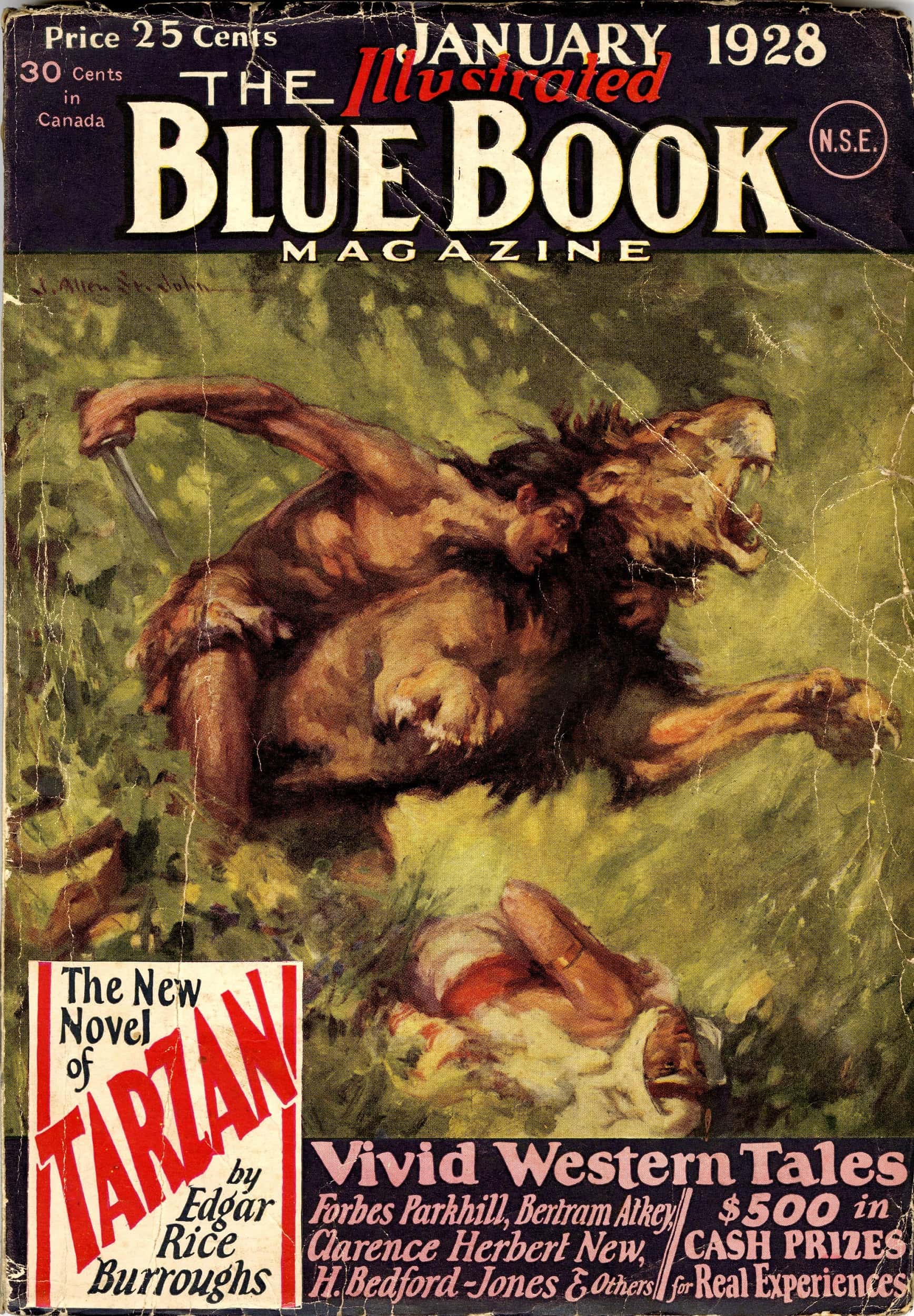
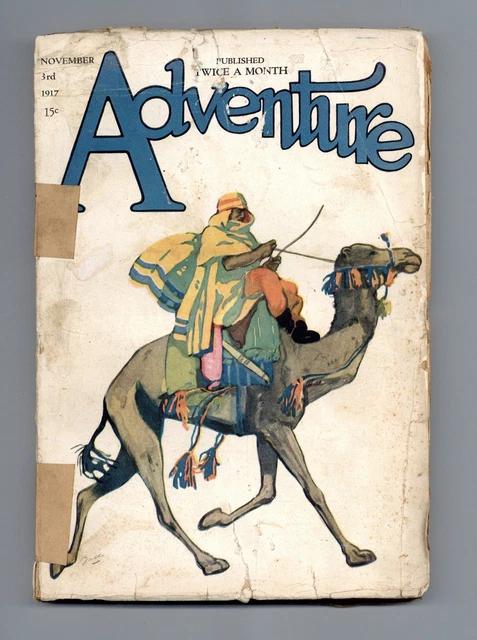
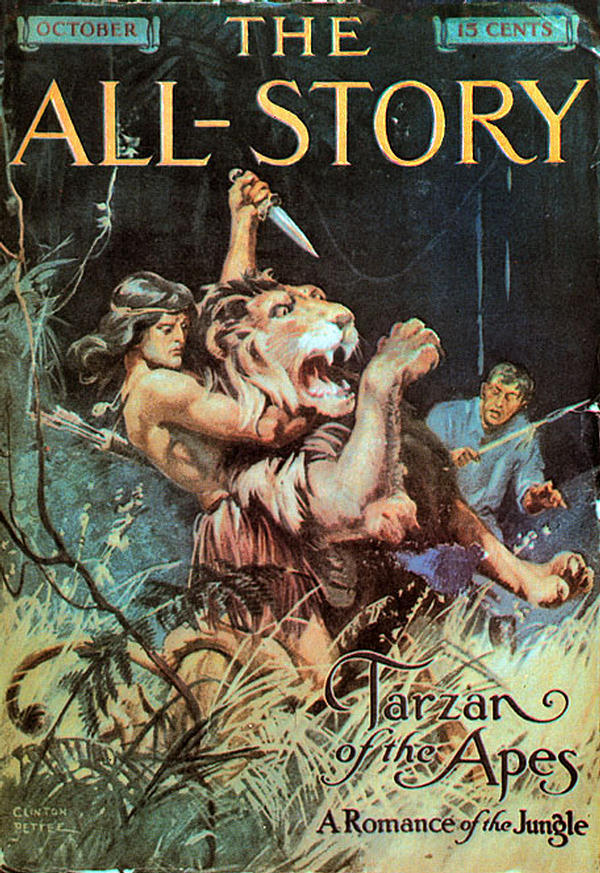
All-Story · October 1912Cover by Clinton Pettee — Tarzan of the Apes complete in one issue.Argosy · Sept. 25, 1920Argosy All-Story Weekly — “Sleeping Acres,” in the merged giant’s first year.Blue Book · January 1928Cover by J. Allen St. John — “The New Novel of Tarzan” by Edgar Rice Burroughs.Adventure · Nov. 3, 1917Cover by John R. Neill — a desert rider on a trotting camel, credited to Neill by the FictionMags index.
Cover · The All-Story, October 1912Tarzan of the Apes complete in one issue — Clinton Pettee’s cover is the first published image of Tarzan. Tap the picture to see it larger.
All-Story
Munsey · 1905–1920 · General fiction · One of the Big Four
The story magazine that changed everything in October 1912, when it ran Tarzan of the Apes complete in a single issue and made Edgar Rice Burroughs the pulps' biggest property. Johnston McCulley's first Zorro story followed in 1919. In 1920 it merged with Argosy.
Its artists in this indexClinton Pettee — the October 1912 Tarzan of the Apes cover, the first published image of Tarzan · Hamilton King — 28 covers from 1906 · Fred W. Small — 28 covers · P. J. Monahan — 13 Burroughs covers, 1913–1923, and the first Zorro cover (Aug. 9, 1919) · Modest Stein · J. Allen St. John — Burroughs's defining illustrator, from 1915
Cover · Argosy All-Story Weekly, Sept. 25, 1920“Sleeping Acres,” a drama of the wheatlands, in the merged giant’s first year. Tap the picture to see it larger.
Argosy
Munsey · All-fiction from 1896 · The first pulp · One of the Big Four
The magazine that started it all: Munsey's all-fiction Argosy was the first pulp. Through the 1920s it ran as Argosy All-Story Weekly, the merged giant of general fiction, before shortening its name back to Argosy in 1929.
Its artists in this indexModest Stein, Stockton Mulford & P. J. Monahan — its most frequent cover artists at the start of the 1920s · Robert A. Graef · Edgar Franklin Wittmack · Paul Stahr — painted most of its covers from 1924 · J. Allen St. John · Walter M. Baumhofer
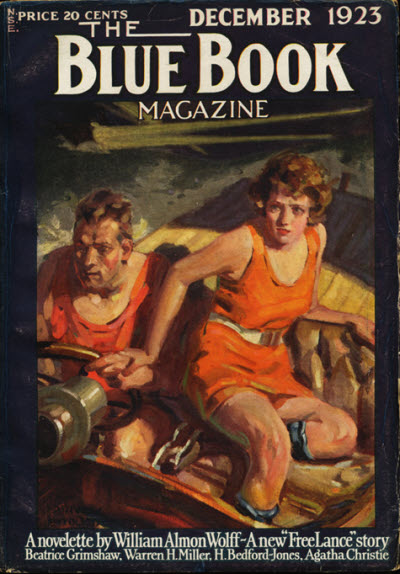
December 1923A “Free Lance” novelette number, with Agatha Christie among the contributors. Tap the picture to see it larger.January 1928 · J. Allen St. JohnTarzan grappling with a lion, for Burroughs’s new Tarzan novel. Tap the picture to see it larger.
The Blue Book Magazine
From 1905 · General fiction · One of the Big Four
With All-Story, Argosy, and Adventure, one of the “Big Four” general-fiction pulps — a story-lover's magazine that ran Edgar Rice Burroughs, Agatha Christie, and Zane Grey. Its December 1923 and January 1928 issues are reproduced above.
Its artists in this indexLaurence Herndon — its primary cover artist for over a decade · Frank Hoban — illustrated most of Burroughs's Blue Book material from 1927 · J. Allen St. John — covers & interiors
Cover · Adventure, Nov. 3, 1917 · John R. NeillA robed desert rider on a trotting camel, from the magazine's twice-a-month years — credited to Neill by name in the FictionMags index. Tap the picture to see it larger.
Adventure
Ridgway / Butterick · From 1910 · Adventure · One of the Big Four
Arthur Sullivant Hoffman's Adventure was the prestige pulp — the magazine writers most wanted to appear in, and a proving ground for cover painters. The sample cover above is its November 3, 1917 issue, painted by John R. Neill — a documented cover, credited to Neill by name in the FictionMags index.
Its artists in this indexM. Leone Bracke — the first issue, Nov. 1910 · Percy E. Cowen — the Aug. 1911 cover · John R. Neill — the Nov. 3, 1917 cover above · illustrated Harold Lamb's stories · Charles Livingston Bull — wildlife covers, including the June 1917 polar-bear cover · Edgar Franklin Wittmack · Walter M. Baumhofer — came up through Adventure's covers in the late 1920s, on his way to Doc Savage · George H. Wert — pen-and-ink interiors from 1924, for Adventure alongside his western titles
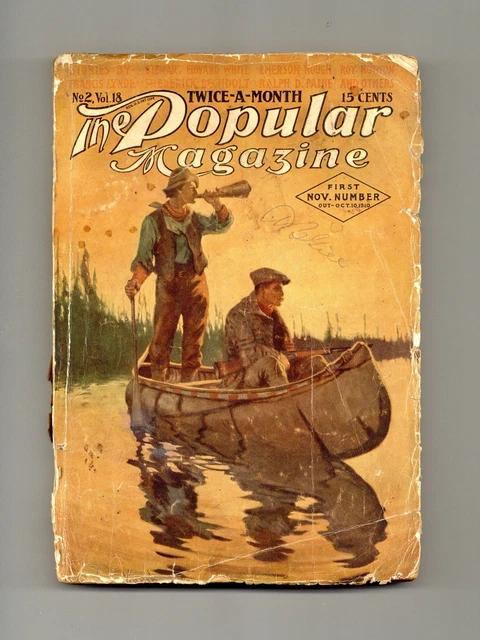
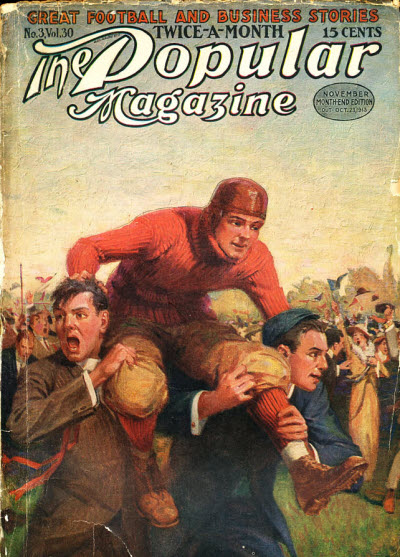
November 1910Street & Smith’s flagship in its first decade. Tap the picture to see it larger.November 1913The football number — general pulps sold sport as hard as adventure. Tap the picture to see it larger.
The Popular Magazine
Street & Smith · 1903–1931 · General fiction
Street & Smith's flagship and one of the great general-fiction pulps — big, long-lived, and a steady market for the best adventure illustrators of the day. Two of its covers are reproduced in the gallery below.
Its artists in this indexJohn A. Coughlin — his first pulp cover, 1913 · N. C. Wyeth — covers from 1909 into the early 1920s (filed under “Famous from the slicks”) · J. C. Leyendecker · Frank E. Schoonover
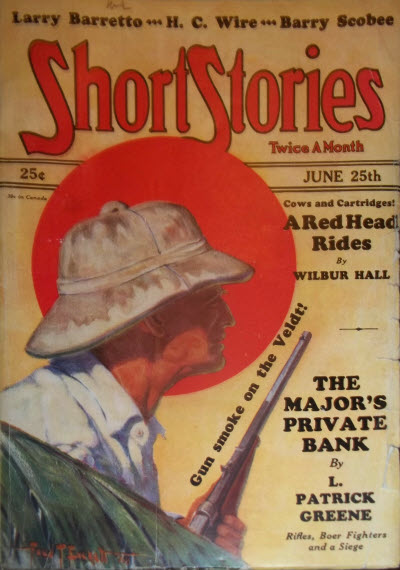
Cover · Short Stories, June 25, 1929 — the adventure cover“Gun smoke on the Veldt!” — a pith-helmet hunter with his rifle, for L. Patrick Greene’s South African adventure. A different cover from the western Short Stories cover used under Westerns. Tap the picture to see it larger.
Short Stories
Doubleday · From 1890 · Adventure & western · Filed beside the Big Four · Also under Westerns, with a different cover
Filed beside the Big Four: a twice-a-month adventure and western institution, famous for its covers, that belongs in both the Adventure and the Westerns categories — so it carries a different cover in each place. Here, under Adventure, its June 25, 1929 issue shows the adventure side — “Gun smoke on the Veldt!”, L. Patrick Greene’s tale of rifles, Boer fighters and a siege. Under Westerns it appears instead with its August 25, 1928 western cover, “Guns Up!” by Ernest Haycox.
Its artists in this indexEdgar Franklin Wittmack — 150+ covers from 1921, the magazine's signature look · Remington Schuyler — western covers · Nick Eggenhofer — western covers, his early work