Twenty-four covers and twelve interiors, 1910–1930 — the sample gallery for the whole volume, now arranged the way the site itself is arranged: section by section, with two or three cover samples from each — and a full dozen interiors, gathered from across the genres. General fiction, adventure, western & sport, detective, romance, the weird, science fiction in two groups — Frank R. Paul's Amazing years and the new hands of 1928–1930 — the slicks, and the interiors. Every one is public domain. Where an artist is firmly documented, the caption says so — a signature on the painting, a credit line, or a reliable index; where it isn't, the caption leaves the credit open rather than guess. That's the house rule for the whole index. Each group links to the page where its section is told in full, and the detailed interior plates follow the gallery on this page.
Inside the magazine: the interior artists
Covers sold the issue, but readers lived with the pictures inside it. The pulps' black-and-white interior art was a second profession, with its own masters — and two of the greatest, Franklin Booth and Joseph Clement Coll, did their defining work in this volume's years. A dozen plates are shown here, spread across the genres: adventure, western, detective, romance, the weird, and science fiction, from nine magazines. Interior pictures were rarely credited as carefully as covers, so each plate is filed the way the index files them all — under the artist where the evidence states one, and under the magazine where it doesn't. Where the issue itself prints a credit — Blue Book names Ralph Frederick beneath his plate and Paul Lehman on his story's first page, and Frank R. Paul signs his Martians — the caption gives it. The Munsey and Street & Smith weeklies credited nobody for their heading art, so those plates carry the credit the issue left them: none.
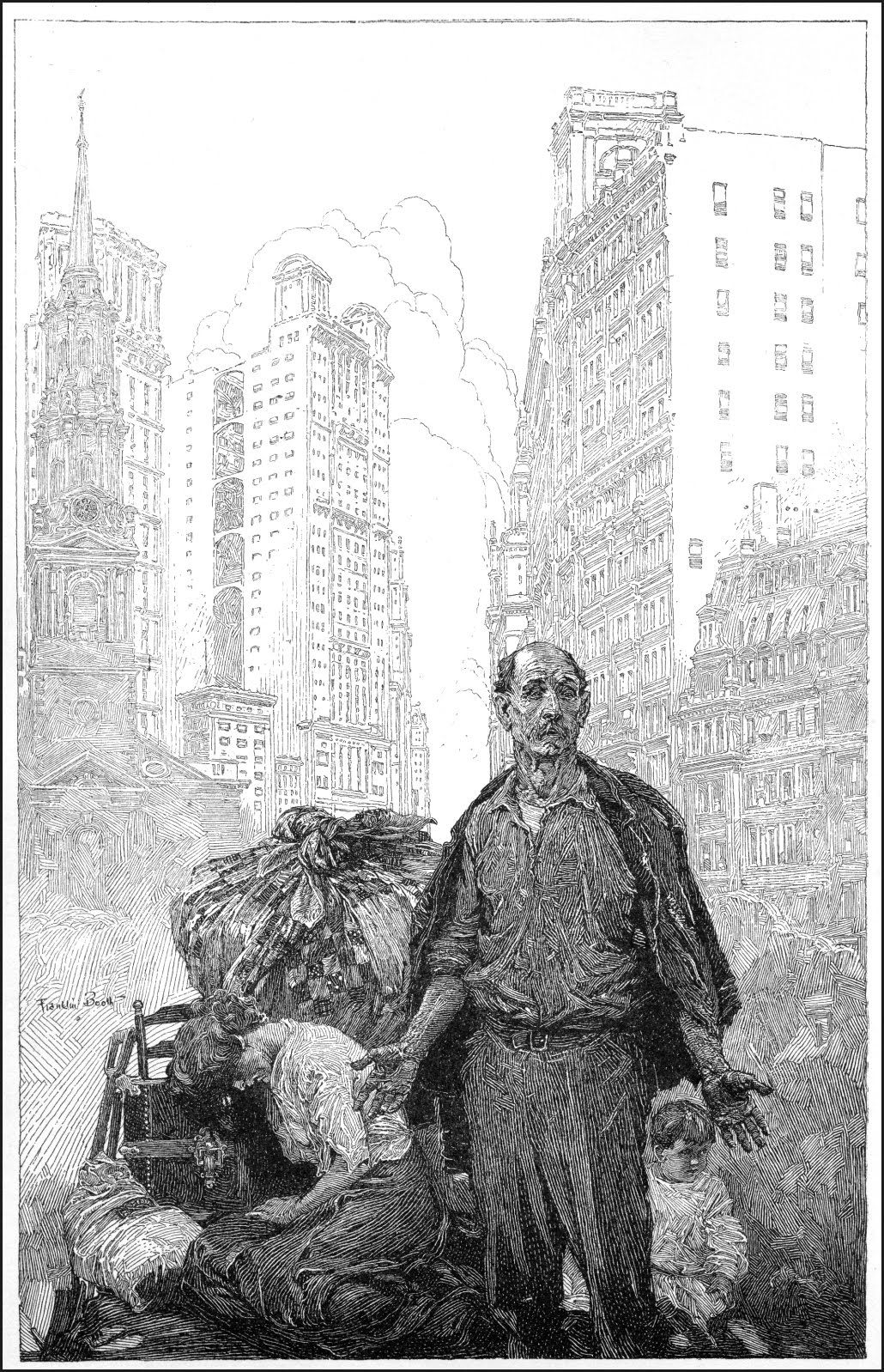
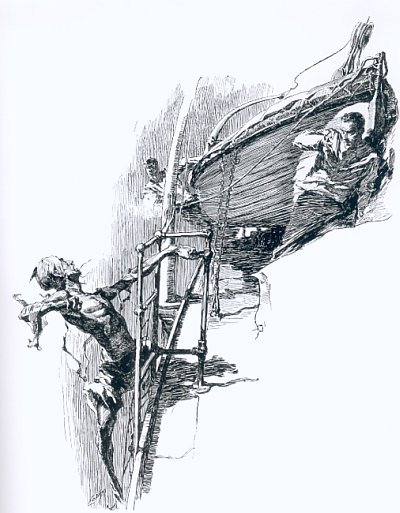
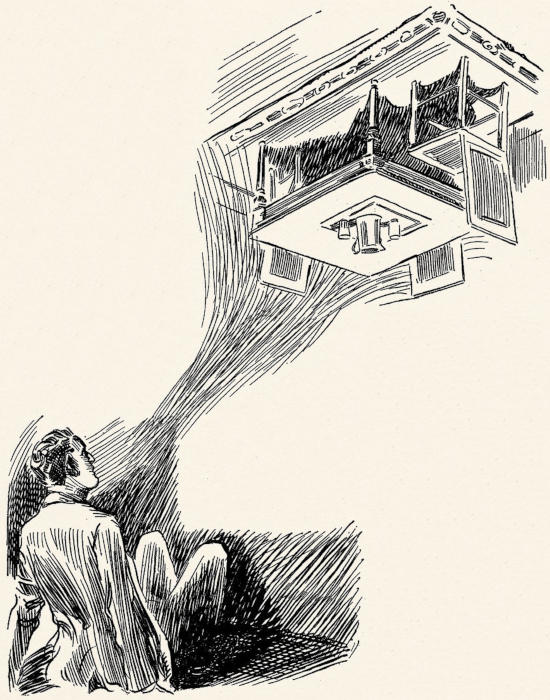
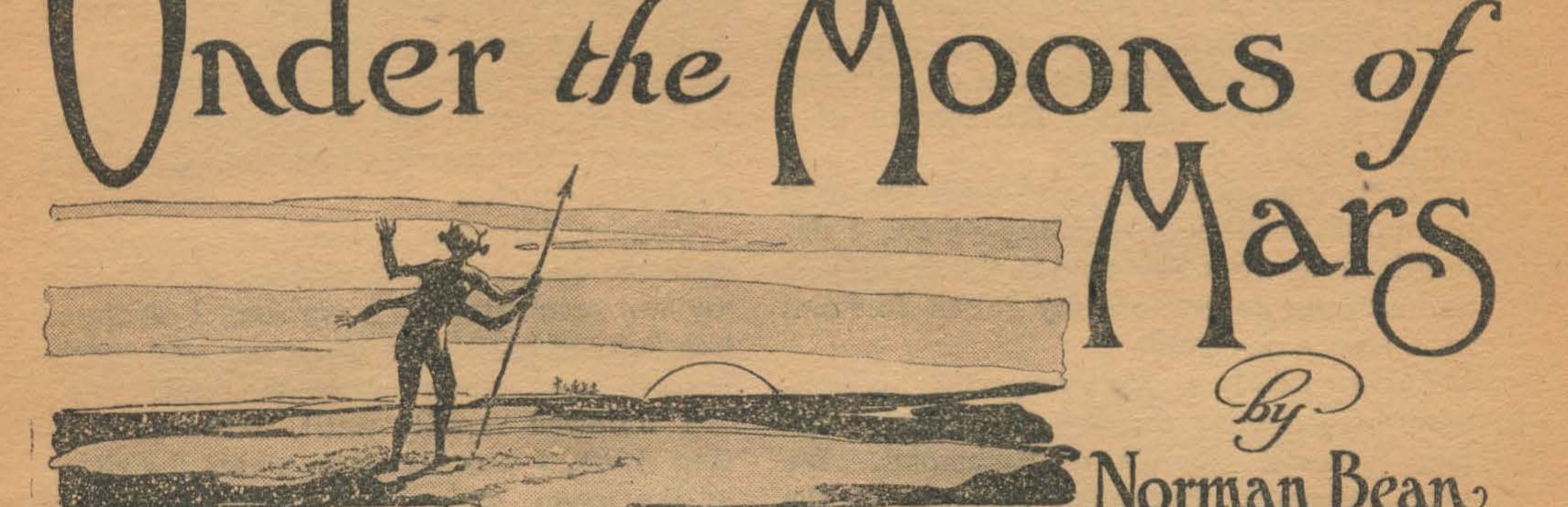
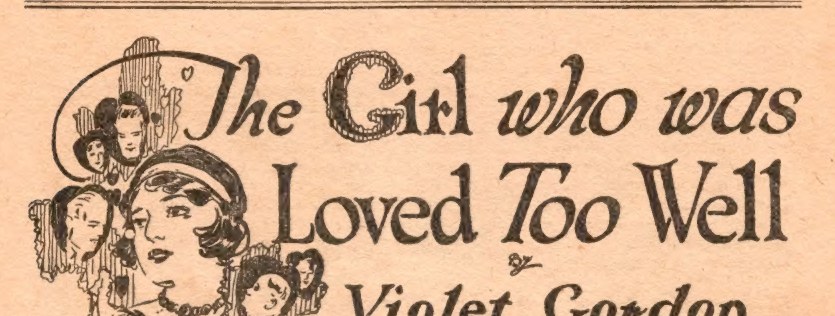
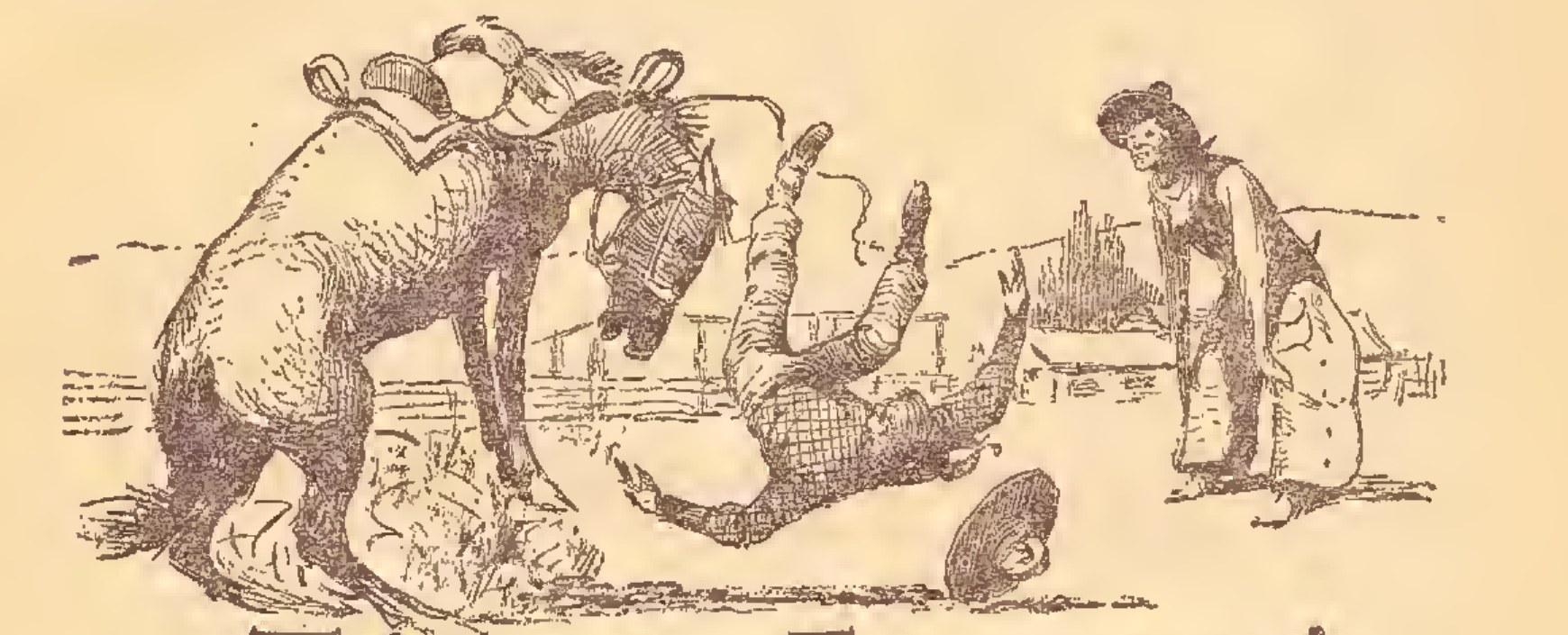
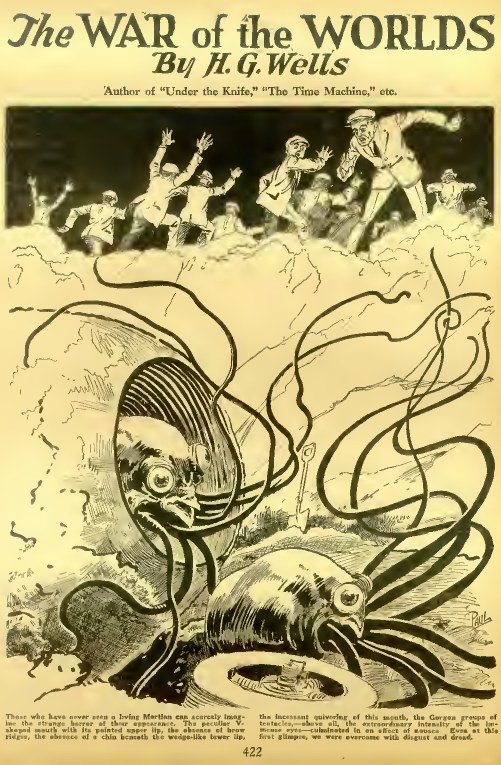
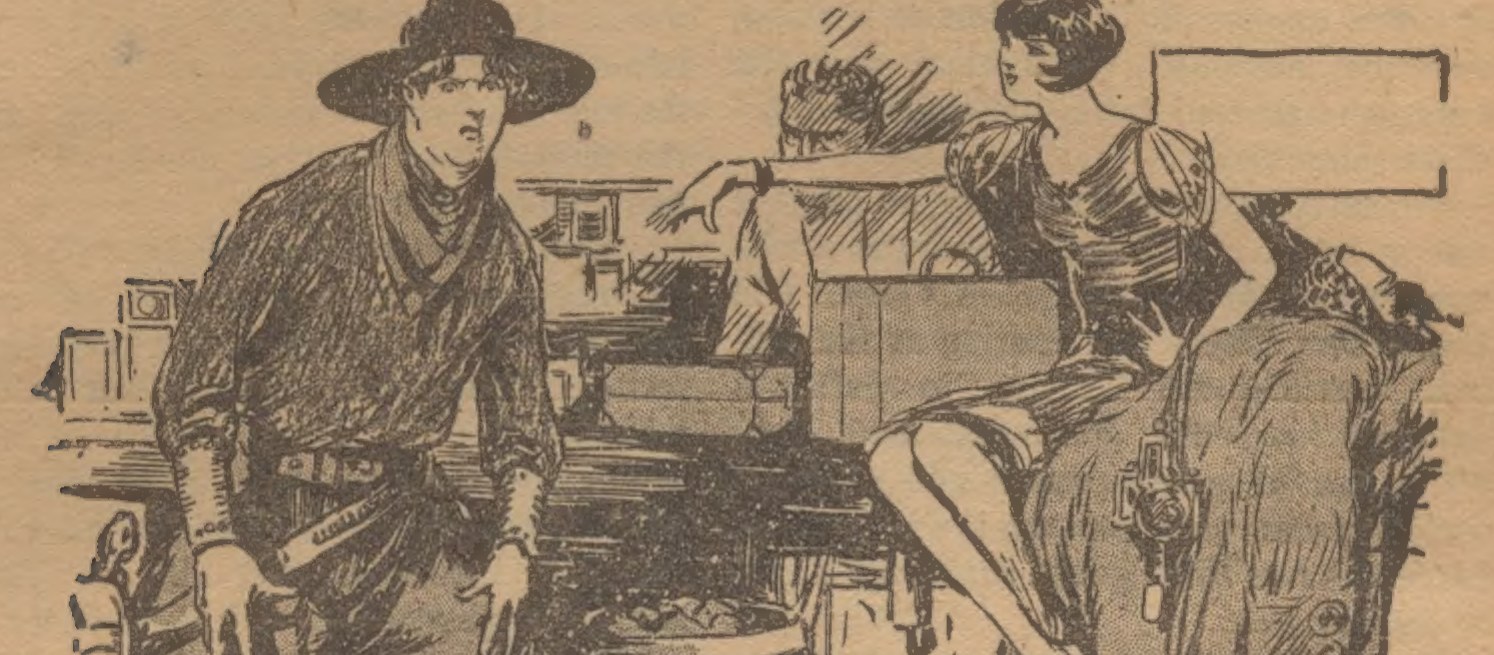
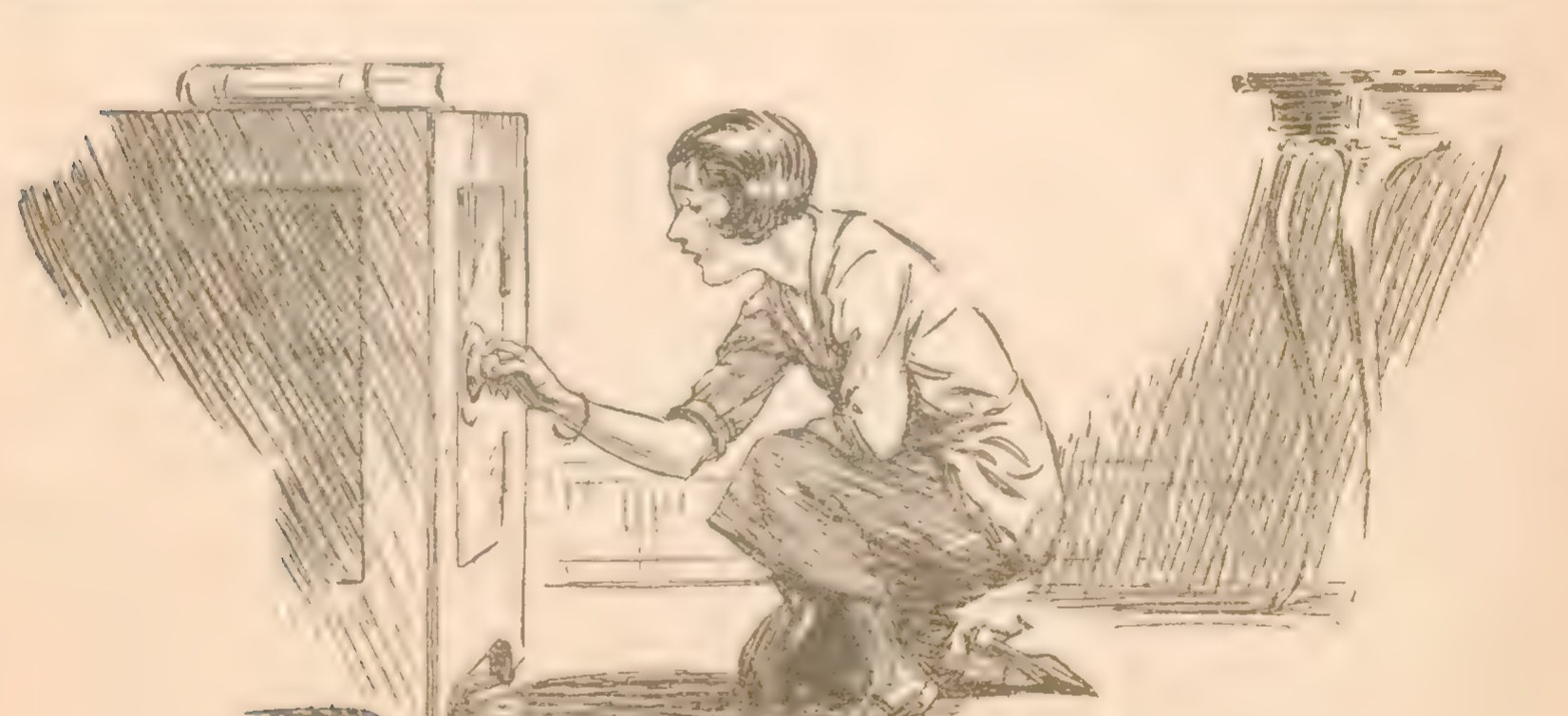
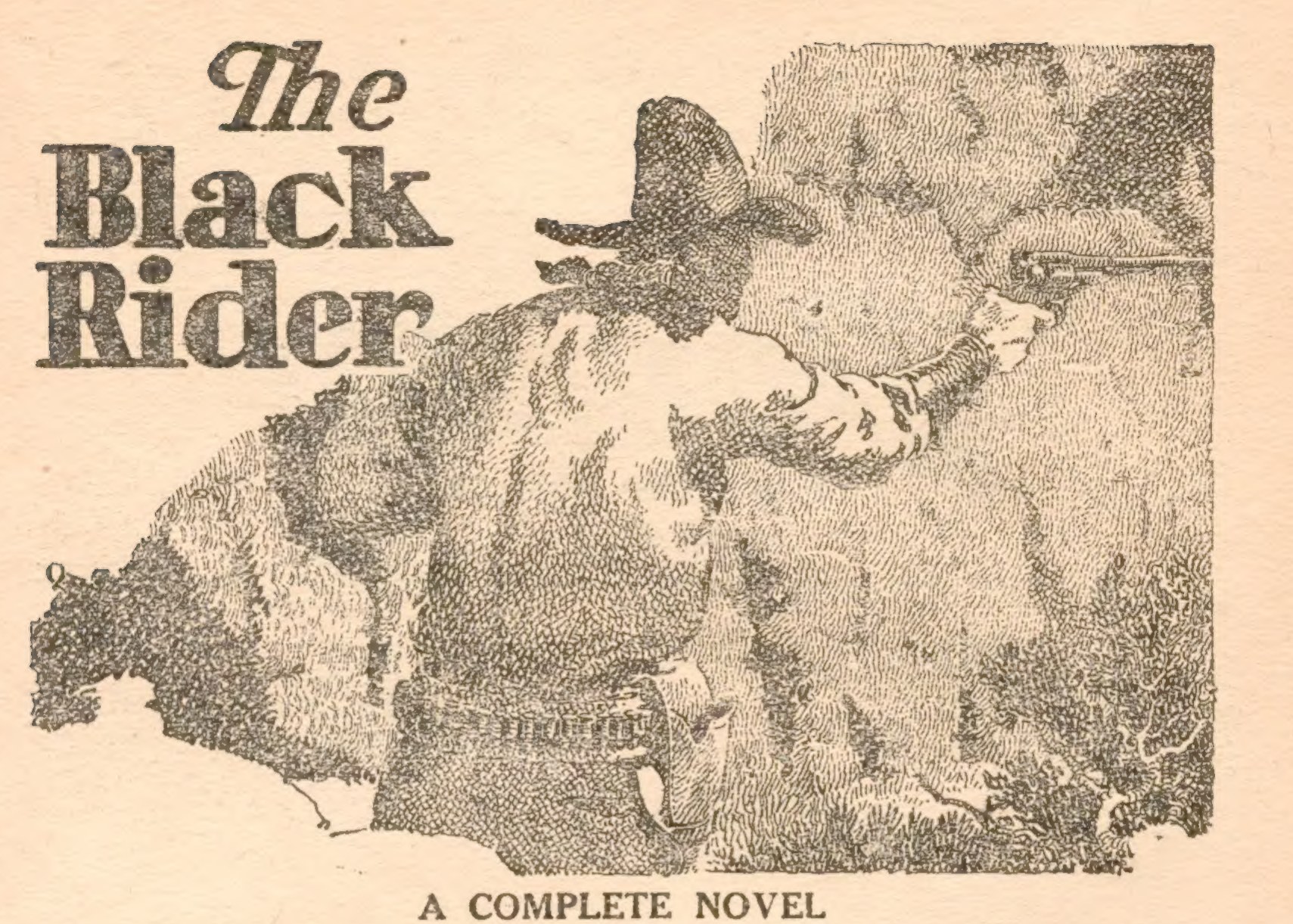
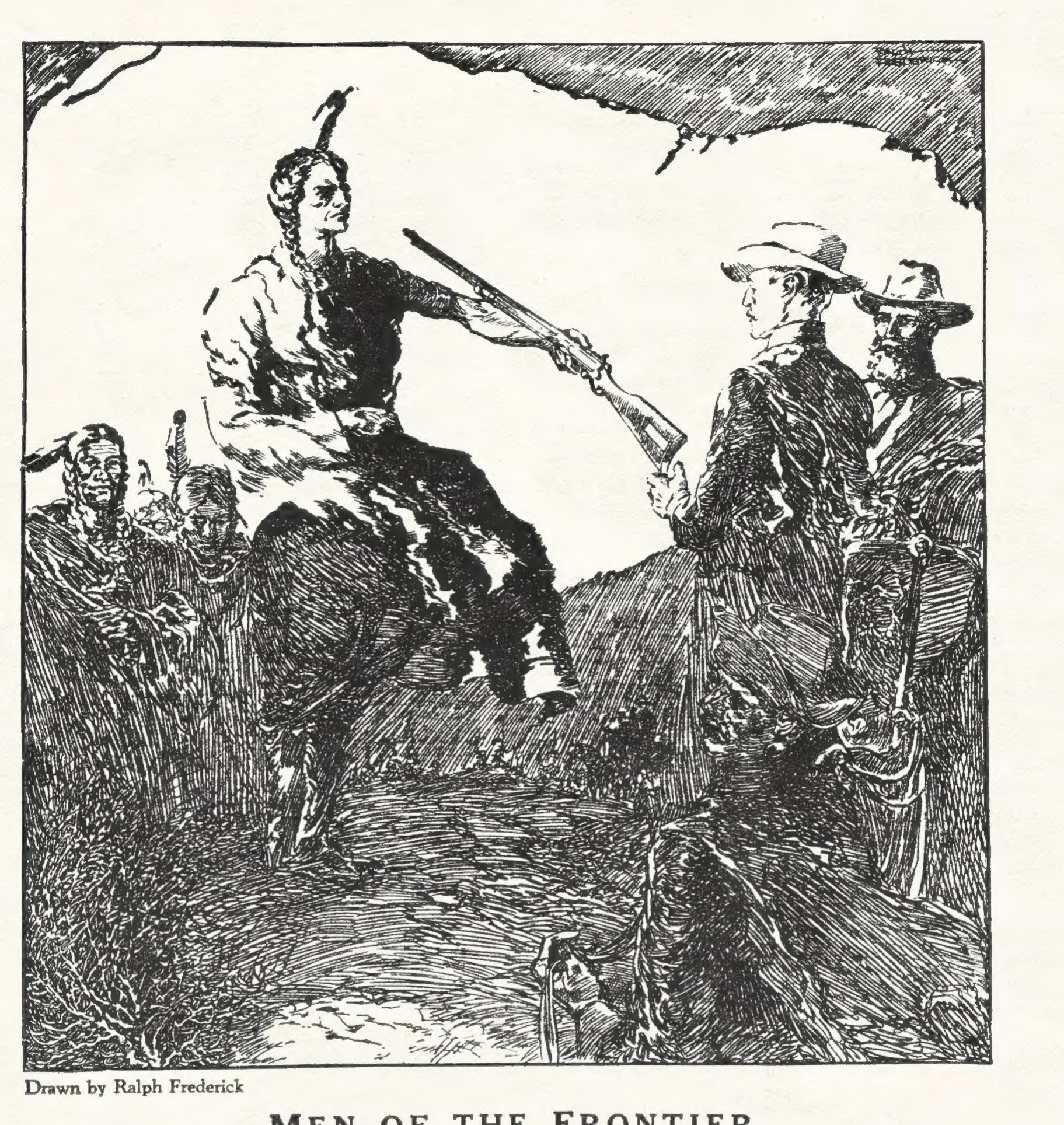
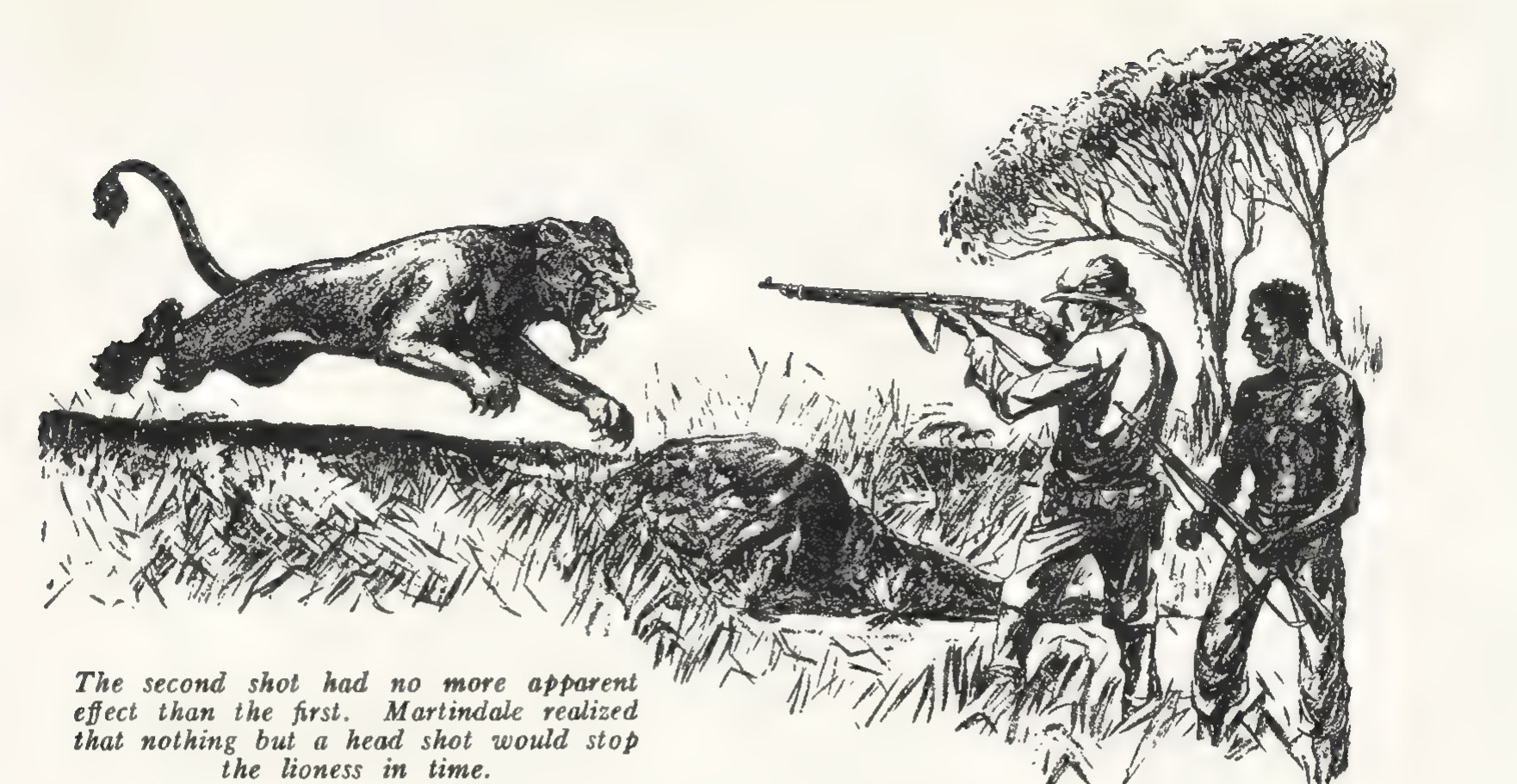
Franklin Booth · Interior illustrationA signed Booth pen drawing — look at his signature at lower left. An immigrant family stands with its bundled belongings beneath the towers of New York, every tone built from individual pen strokes meant to imitate wood engraving. This is the work that filled Everybody's, Harper's, and McClure's in the 1900s–1910s.Joseph Clement Coll · Interior illustrationColl at full stretch: a sailor going over a ship's rail, the whole scene whirling in pen strokes — motion and terror drawn with almost no solid black. Coll's serial illustrations for Everybody's Magazine and the other general-fiction magazines of the 1900s–1910s are why illustrators who never met him called him the master.Weird Tales · Interior illustration, May 1923From the weird pulp's first year — an uncredited pen drawing of a bed tilting down from a ceiling toward the man beneath it. Weird Tales interiors were seldom signed in these early issues, so this one is filed the way the index files them all: under the magazine, with the credit left open.The All-Story · Heading illustration, February 1912The first picture of Mars in the pulps: a four-armed Martian with a spear, drawn as a thin strip inside the title lettering of “Under the Moons of Mars” — Edgar Rice Burroughs's first serial, published under the name “Norman Bean.” The All-Story credited no artist for it, so it is filed under the magazine.Love Story Magazine · Heading banner, July 17, 1926Romance had its own interior language: not a scene but a banner — the heroine's face, and the faces around her story, woven into the title lettering of Violet Gordon's “The Girl Who Was Loved Too Well.” Street & Smith credited no artist for these banners.Western Story Magazine · Heading illustration, June 5, 1926The western weekly's heading for F. R. Buckley's “That's Funny!”, a Peg Leg Garfield story: Peg Leg's world turned upside down in one pen stroke — horse bucking, cowboy flying, hat already gone. The artist is not credited in the issue.Amazing Stories · Interior plate by Frank R. Paul, August 1927Paul painted the covers, and inside the magazine he drew them too. His full-page plate for the Amazing reprint of Wells's “The War of the Worlds” — Martians hauling themselves out of the pit while the crowd breaks above them — is signed “Paul” at the right edge, and the ISFDB contents listing credits him with the story's interior artwork.Argosy All-Story Weekly · Heading illustration, August 13, 1927Every Munsey serial opened under a pen scene like this: Jane Holly, fifteen thousand dollars of sable coat and dangling gold, stepping into Vingo at the head of Loring Brent's “Bringing the Boom to Vingo.” Munsey credited no artist for its headings.Detective Story Magazine · Heading illustration, January 7, 1928The detective weekly's heading art was quieter than its covers — a secretary kneeling at a locked desk drawer, in loose hatching, over Christopher B. Booth's “Printed Peril.” No artist is credited in the issue. (The author, Christopher B. Booth, is no relation to Franklin Booth, above.)The Popular Magazine · Heading illustration, May 19, 1928A complete western novel in the general-fiction flagship, headed by a masked rider drawn in thousands of stipple dots. The issue credits no artist; a small signature mark at the drawing's left edge is not legible in the scan, so the credit is left open rather than guessed.The Blue Book Magazine · Plate by Ralph Frederick, April 1929Blue Book did credit its artists — “Drawn by Ralph Frederick” is printed directly beneath this plate. For the magazine's “Men of the Frontier” feature, Frederick drew the moment the whole West knows: Chief Joseph on horseback, handing his rifle to the officer facing him, ending the Nez Percé retreat of 1877.The Blue Book Magazine · Interior by Paul Lehman, April 1929Adventure inside Blue Book: a lioness in mid-leap, Martindale firing point-blank, from James Edwin Baum's Abyssinian story “The Lair of the Leopard.” The credit is the issue's own — the story's first page announces “Illustrated by Paul Lehman” — and the plate keeps its printed caption underneath.